|
Equipment
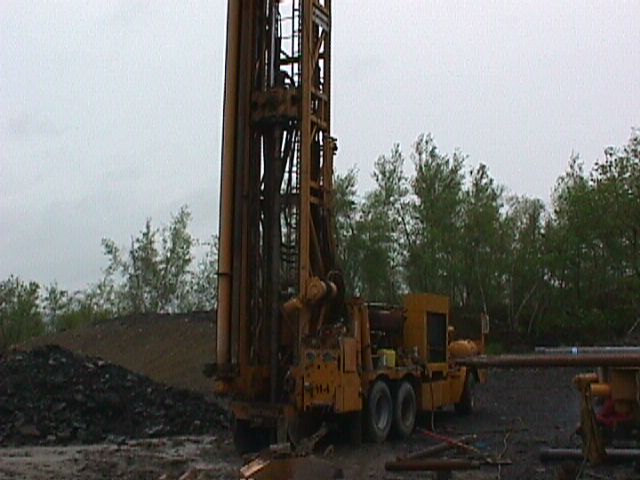 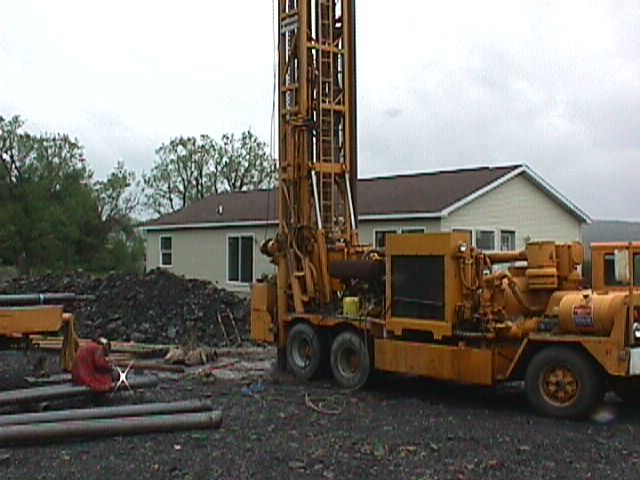 This is our Well Driller. It's an Ingersoll-Rand T-4 machine.
It weighs about 28 tons fully loaded. This is our Well Driller. It's an Ingersoll-Rand T-4 machine.
It weighs about 28 tons fully loaded.
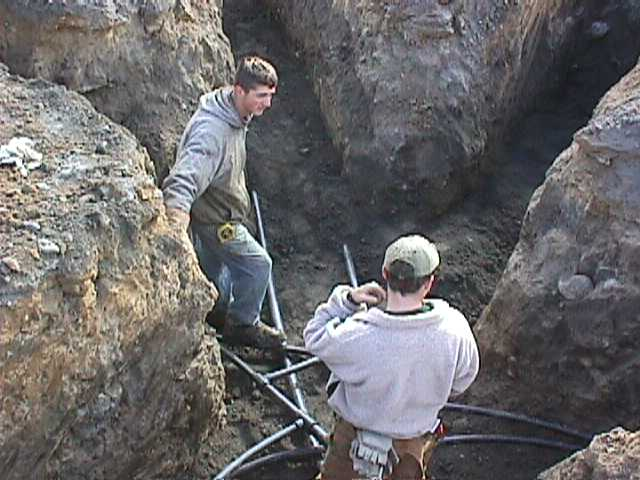 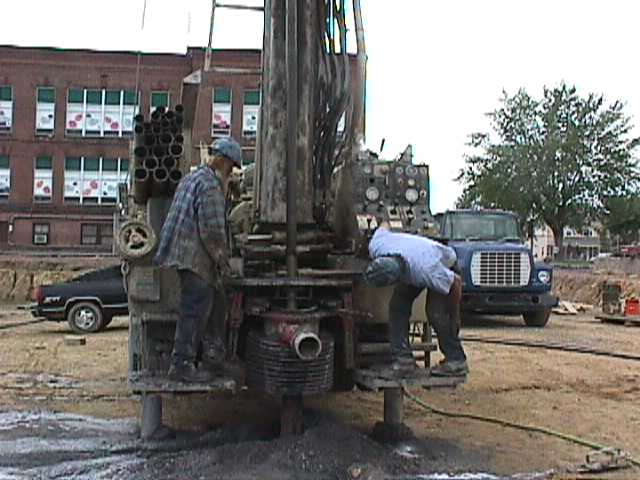 Our second machine is a 1995 T-2 machine. It has
many benefits above the T-4 and allows us to do a variety of
different work easily. There are a number of drawbacks, but
overall it's the machine of choice over the T-4. Our second machine is a 1995 T-2 machine. It has
many benefits above the T-4 and allows us to do a variety of
different work easily. There are a number of drawbacks, but
overall it's the machine of choice over the T-4.
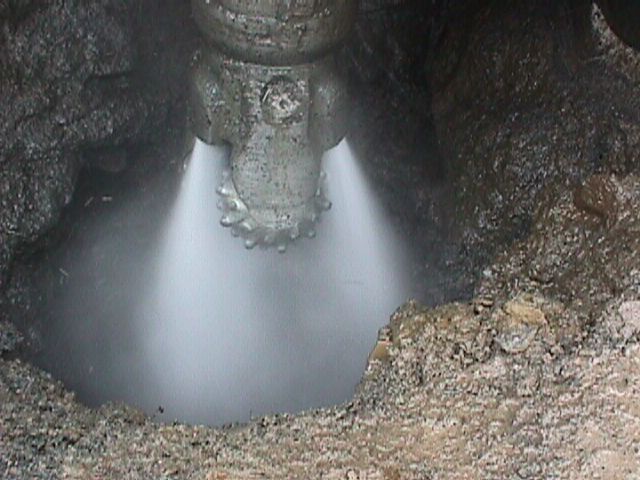
This is a picture of the roller bit that drills the hole for
the casing, it's about 9" across, and 17' long. It cuts the
hole by rotating the three cutting wheels while pressing down.
There are three holes in the bottom of the bit that allows air
and water to pass through and the mixture blows the cuttings back
to the top of the hole. Water is only used sometime to help lift
the cuttings all the way to the top. This paticular hole we are
having to drill a 380 foot hole and set that much casing to
protect the well from a number of coal mines that were
'discovered' while drilling. In our area, 380 feet of casing is
very rare. More popular is 40 to 160 feet.
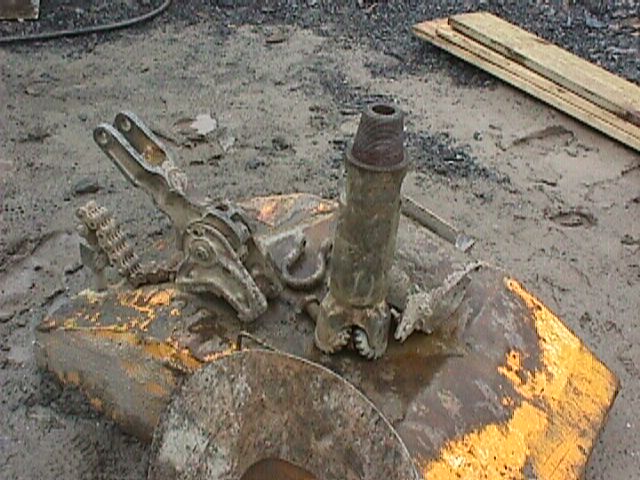 This is just another picture of some more tools
that are used. To the upper left is a hydraulic driven 'break out
wrench', it helps unthread all types of stuck drilling tools. In
the middle is another roller bit, much the same operation as the
larger one in the above picture only this is about 6" in
diameter. This is just another picture of some more tools
that are used. To the upper left is a hydraulic driven 'break out
wrench', it helps unthread all types of stuck drilling tools. In
the middle is another roller bit, much the same operation as the
larger one in the above picture only this is about 6" in
diameter.
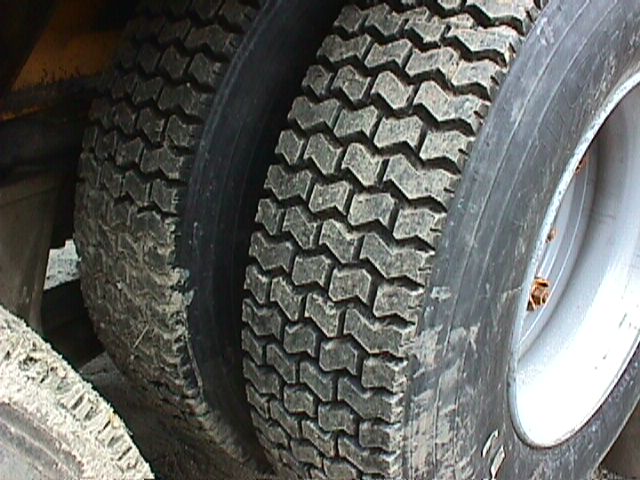 We spend countless hours getting ourselves stuck,
and unstuck. These tires are great. We still get stuck, but it's
fewer and far between now. (they don't look like a lot, but they
really do work) We spend countless hours getting ourselves stuck,
and unstuck. These tires are great. We still get stuck, but it's
fewer and far between now. (they don't look like a lot, but they
really do work)
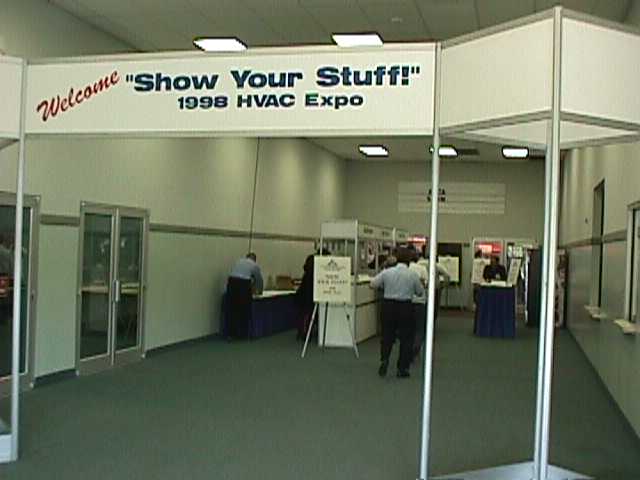 We're never really done with schooling We're never really done with schooling
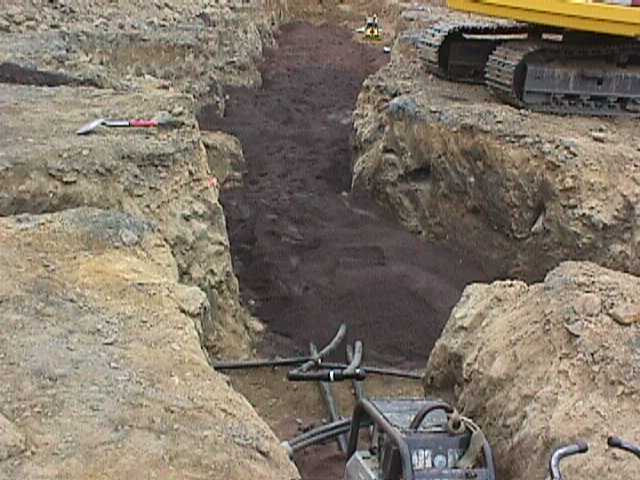 This is one of the bit designs that we tried to
use at one point. This is one of the bit designs that we tried to
use at one point.
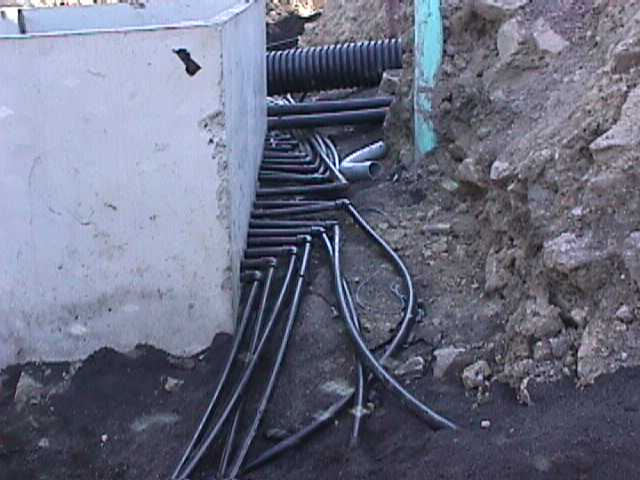 This is a well level indicator. It tells how
far down the top of the water is. When a test pump starts pumping
we can see what the water level does and make calculations on how
much the well can produce. This is a well level indicator. It tells how
far down the top of the water is. When a test pump starts pumping
we can see what the water level does and make calculations on how
much the well can produce.
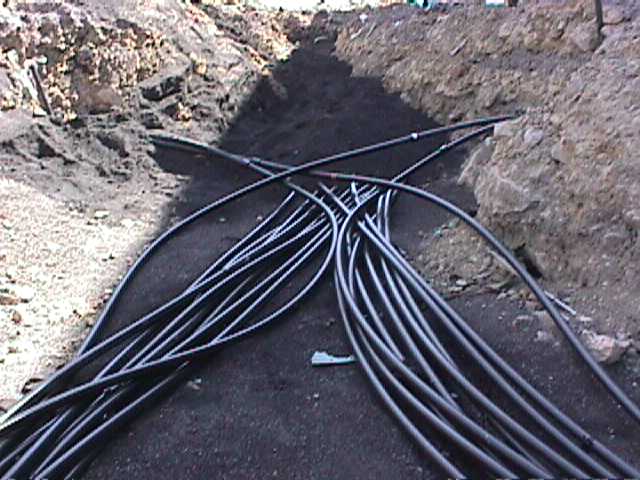 This is a number of equipment for Socket-fusion
work. it melts the plastic pipe and fuses it back together in one
continuous piece of pipe. This is a number of equipment for Socket-fusion
work. it melts the plastic pipe and fuses it back together in one
continuous piece of pipe.
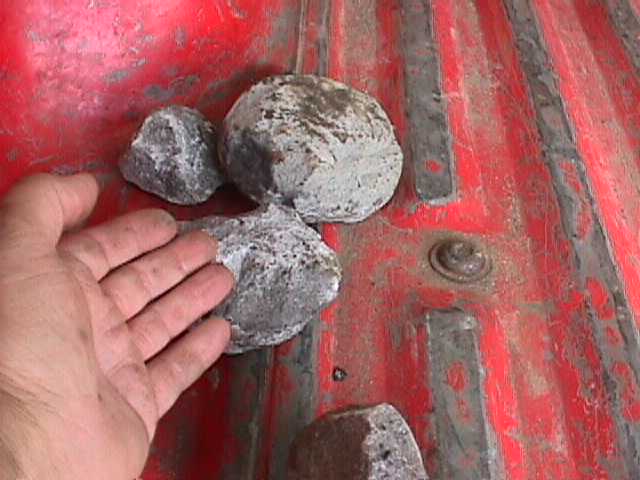 Pipe cutters on 4" pipe? No, just an
average saws-all. Pipe cutters on 4" pipe? No, just an
average saws-all.
|